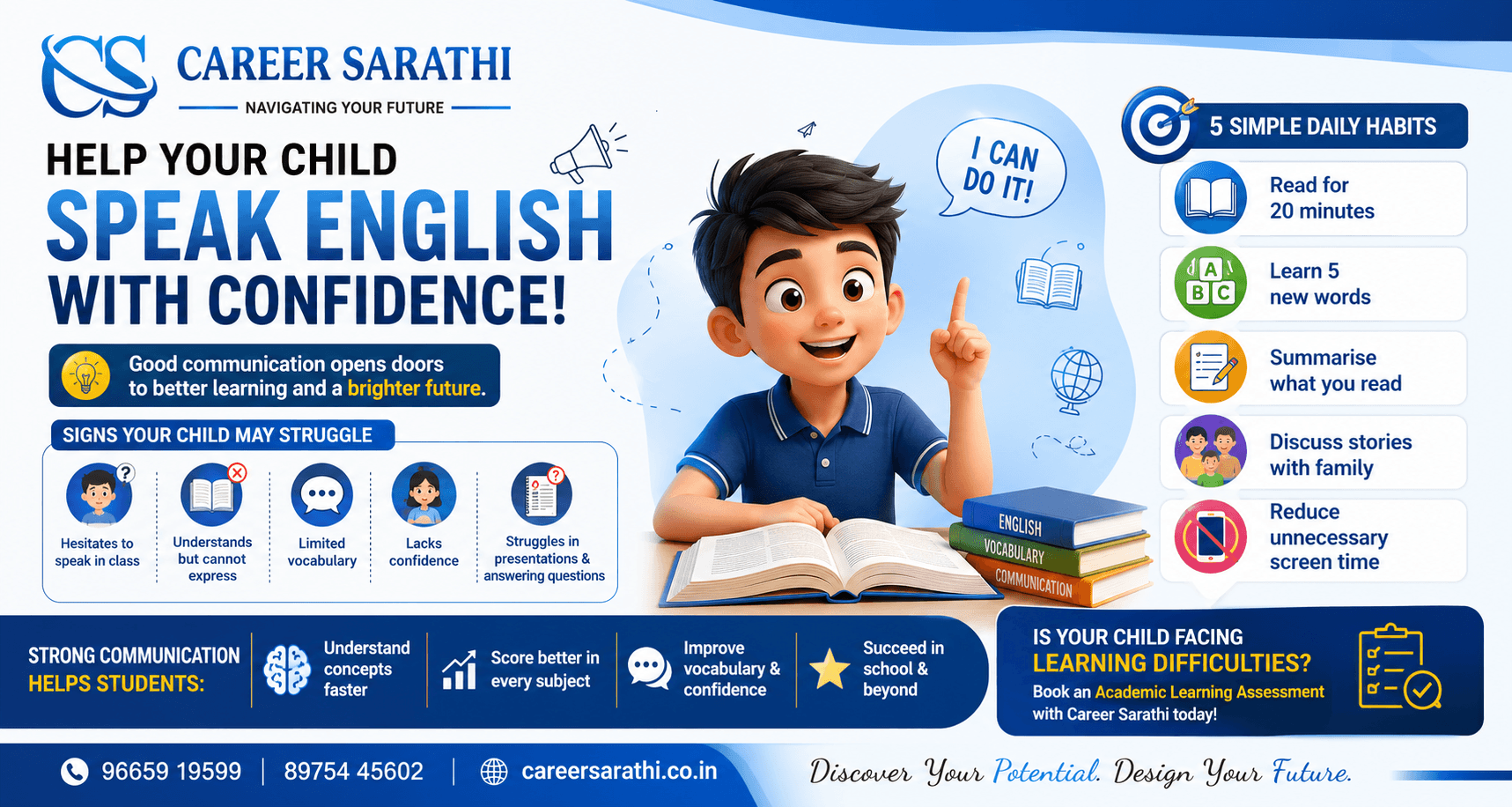
Why is English Communication Important?
Today, English is not just another school subject. It is a life skill that opens doors to higher education, competitive exams, careers, and global opportunities.
Students with good communication skills are more likely to:
1. Participate actively in class.
2. Build self-confidence.
3. Perform well in interviews and presentations.
4. Develop leadership qualities.
5. Succeed in future careers.
Strong communication is often valued as much as academic knowledge.
Signs That Your Child Needs to Improve English Communication
Parents and teachers may notice that a student:
1. Hesitates to speak English in class.
2. Understands English but replies in their native language.
3. Has a limited vocabulary.
4. Makes frequent grammar mistakes.
5. Avoids reading English books.
6. Feels nervous during presentations.
7. Cannot express ideas clearly.
8. Mispronounces common words.
9. Lacks confidence while speaking.
10. Avoids conversations with teachers or classmates in English.
Common Reasons Behind Poor English Communication
1. Fear of Making Mistakes
Many students worry that others will laugh if they pronounce a word incorrectly.
2. Lack of Practice
English is treated as an exam subject instead of a communication skill.
3. Limited Vocabulary
Students often know only basic words, making conversations difficult.
4. No English-Speaking Environment
Most conversations at home happen in the mother tongue, leaving little opportunity to practise.
5. Excessive Screen Time
Time spent on games and social media replaces reading, storytelling, and meaningful conversations.
6. Fear of Public Speaking
Some children know the answer but hesitate to speak in front of others.
7. Comparing with Fluent Speakers
Comparisons lower confidence and discourage students from trying.
15 Practical Tips to Improve English Communication
1. Speak English Every Day
Start with simple sentences.
Examples:
a. Good morning.
b. May I come in?
c. I am hungry.
d. I finished my homework.
Consistency is more important than perfection.
2. Read for 20 Minutes Daily
Read:
a. Storybooks
b. Children's magazines
c. Newspapers
d. Simple novels
e. Comics with meaningful content
Reading naturally improves vocabulary and sentence formation.
3. Learn Five New Words Every Day
Maintain a vocabulary notebook.
Write:
a. Word
b. Meaning
c. Sentence
d. Synonym
Review regularly.
4. Watch English Content with Subtitles
Choose educational and age-appropriate videos.
Listen carefully to pronunciation and sentence structure.
5. Think in English
Instead of translating every sentence, encourage students to think directly in English.
For example:
"I need water."
instead of mentally translating from another language.
6. Read Aloud
Reading aloud improves:
a. Pronunciation
b. Fluency
c. Confidence
d. Voice clarity
Practise for 10–15 minutes every day.
7. Talk to Family in English
Introduce an "English Time" at home.
Speak only English for 15–20 minutes every day.
8. Don't Fear Mistakes
Mistakes are part of learning.
Every fluent speaker once struggled too.
9. Learn Through Stories
Storytelling improves:
a. Vocabulary
b. Grammar
c. Imagination
d. Confidence
Encourage children to narrate stories in their own words.
10. Play Word Games
Examples:
a. Scrabble
b. Word Search
c. Crossword Puzzles
d. Antakshari with English words
e. Vocabulary quizzes
Learning becomes enjoyable.
11. Improve Listening Skills
Listen to:
a. Podcasts for children
b. Audiobooks
c. English news
d. Educational videos
Good speakers are first good listeners.
12. Practise Public Speaking
Encourage students to:
a. Introduce themselves
b. Speak for one minute on a topic
c. Participate in assemblies
d. Join debates and elocution competitions
Confidence grows through experience.
13. Keep an English Journal
Write 5–10 sentences every day about:
a. School
b. Friends
c. Hobbies
d. Favourite books
e. Daily experiences
Writing strengthens communication.
14. Use Positive Encouragement
Replace:
❌ "Your English is weak."
with
✅ "You're improving every day."
Confidence drives progress.
15. Make English Fun
Use:
a. Games
b. Role plays
c. Group discussions
d. Picture descriptions
e. Vocabulary challenges
Children learn best when they enjoy the process.
Why is English Communication Important?
Today, English is not just another school subject. It is a life skill that opens doors to higher education, competitive exams, careers, and global opportunities.
Students with good communication skills are more likely to:
1. Participate actively in class.
2. Build self-confidence.
3. Perform well in interviews and presentations.
4. Develop leadership qualities.
5. Succeed in future careers.
Strong communication is often valued as much as academic knowledge.
Signs That Your Child Needs to Improve English Communication
Parents and teachers may notice that a student:
6. Hesitates to speak English in class.
7. Understands English but replies in their native language.
8. Has a limited vocabulary.
9. Makes frequent grammar mistakes.
10. Avoids reading English books.
11. Feels nervous during presentations.
12. Cannot express ideas clearly.
13. Mispronounces common words.
14. Lacks confidence while speaking.
15. Avoids conversations with teachers or classmates in English.
Common Reasons Behind Poor English Communication
1. Fear of Making Mistakes
Many students worry that others will laugh if they pronounce a word incorrectly.
2. Lack of Practice
English is treated as an exam subject instead of a communication skill.
3. Limited Vocabulary
Students often know only basic words, making conversations difficult.
4. No English-Speaking Environment
Most conversations at home happen in the mother tongue, leaving little opportunity to practise.
5. Excessive Screen Time
Time spent on games and social media replaces reading, storytelling, and meaningful conversations.
6. Fear of Public Speaking
Some children know the answer but hesitate to speak in front of others.
7. Comparing with Fluent Speakers
Comparisons lower confidence and discourage students from trying.
15 Practical Tips to Improve English Communication
1. Speak English Every Day
Start with simple sentences.
Examples:
i. Good morning.
ii. May I come in?
iii. I am hungry.
iv. I finished my homework.
Consistency is more important than perfection.
2. Read for 20 Minutes Daily
Read:
i. Storybooks
ii. Children's magazines
iii. Newspapers
iv. Simple novels
v. Comics with meaningful content
Reading naturally improves vocabulary and sentence formation.
3. Learn Five New Words Every Day
Maintain a vocabulary notebook.
Write:
i. Word
ii. Meaning
iii. Sentence
iv. Synonym
Review regularly.
4. Watch English Content with Subtitles
Choose educational and age-appropriate videos.
Listen carefully to pronunciation and sentence structure.
5. Think in English
Instead of translating every sentence, encourage students to think directly in English.
For example:
"I need water."
instead of mentally translating from another language.
6. Read Aloud
Reading aloud improves:
i. Pronunciation
ii. Fluency
iii. Confidence
iv. Voice clarity
Practise for 10–15 minutes every day.
7. Talk to Family in English
Introduce an "English Time" at home.
Speak only English for 15–20 minutes every day.
8. Don't Fear Mistakes
Mistakes are part of learning.
Every fluent speaker once struggled too.
9. Learn Through Stories
Storytelling improves:
i. Vocabulary
ii. Grammar
iii. Imagination
iv. Confidence
Encourage children to narrate stories in their own words.
10. Play Word Games
Examples:
i. Scrabble
ii. Word Search
iii. Crossword Puzzles
iv. Antakshari with English words
v. Vocabulary quizzes
Learning becomes enjoyable.
11. Improve Listening Skills
Listen to:
i. Podcasts for children
ii. Audiobooks
iii. English news
iv. Educational videos
Good speakers are first good listeners.
12. Practise Public Speaking
Encourage students to:
i. Introduce themselves
ii. Speak for one minute on a topic
iii. Participate in assemblies
iv. Join debates and elocution competitions
Confidence grows through experience.
13. Keep an English Journal
Write 5–10 sentences every day about:
i. School
ii. Friends
iii. Hobbies
iv. Favourite books
v. Daily experiences
Writing strengthens communication.
14. Use Positive Encouragement
Replace:
❌ "Your English is weak."
with
✅ "You're improving every day."
Confidence drives progress.
15. Make English Fun
Use:
i. Games
ii. Role plays
iii. Group discussions
iv. Picture descriptions
v. Vocabulary challenges
Children learn best when they enjoy the process.
Tips for Parents
✔ Speak simple English at home without pressuring your child.
✔ Appreciate every effort.
✔ Read together every evening.
✔ Watch English cartoons or documentaries together.
✔ Avoid correcting every mistake immediately—focus on communication first.
✔ Encourage curiosity and conversation.
Tips for Teachers
i. Create an English-speaking classroom environment.
ii. Encourage every child to participate.
iii. Use role plays and storytelling.
iv. Organise group discussions.
v. Appreciate effort, not just correctness.
vi. Conduct "Word of the Day" activities.
The 30-Day English Challenge
Every day:
📖 Read for 20 minutes
🗣 Speak English for 15 minutes
📝 Learn 5 new words
🎧 Listen to 10 minutes of English audio
📚 Write one short paragraph
Consistency for 30 days can bring remarkable improvement.